Uganda’s Lenacapavir Launch: Five Early Lessons for Turning Innovation into Access
Carolyne Akello
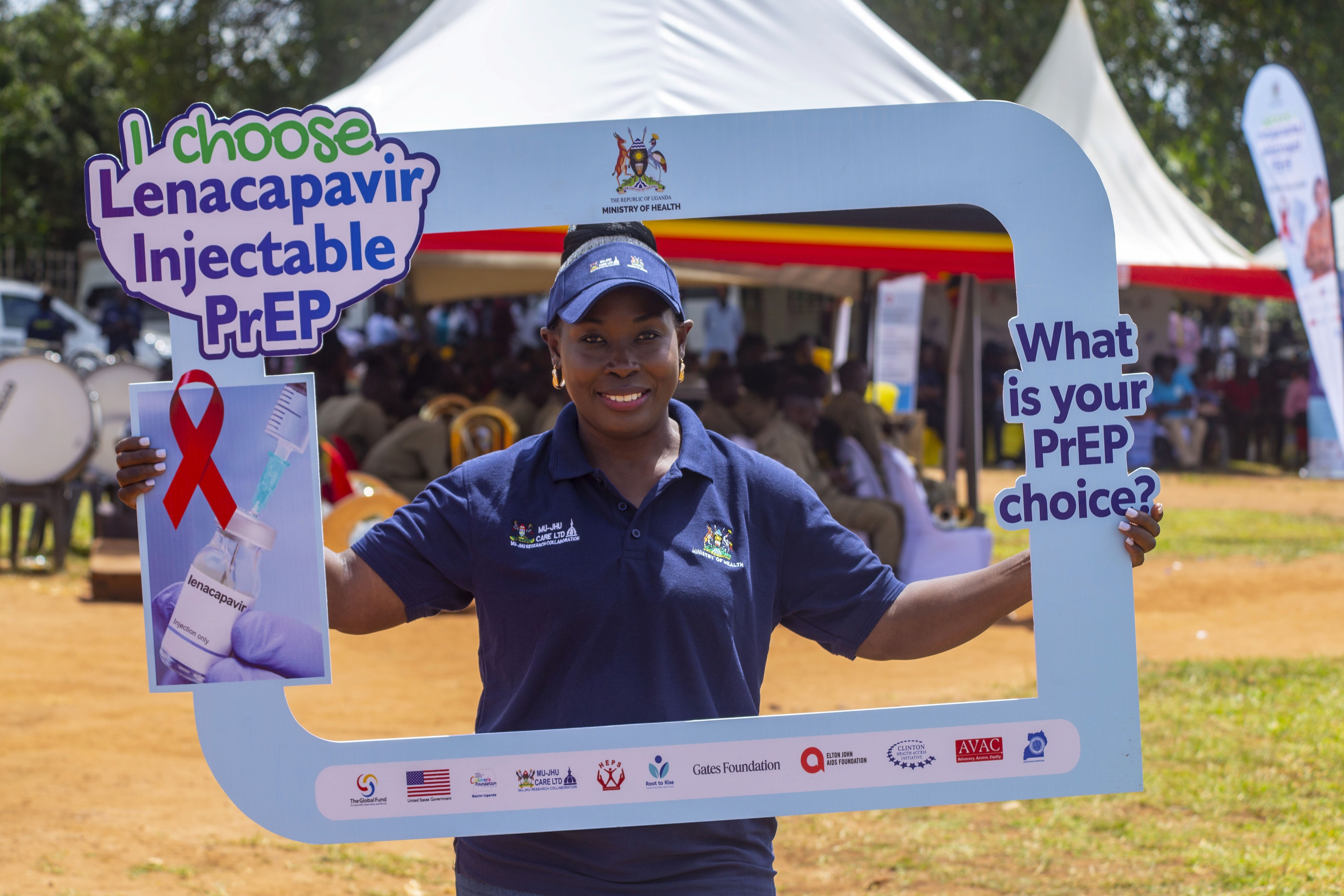
Uganda’s launch of lenacapavir (LEN) for HIV prevention on April 17 is an important milestone – not only for the country, but for the future of PrEP choice across the region. As a twice-yearly injectable PrEP option, LEN offers a powerful new prevention method for people who want long-acting, discreet protection without the burden of daily pill-taking.
But having supported PrEP product introduction in Uganda for several years, I know that a successful launch is never just about the product. It is about the systems, people, policies, and partnerships that make access possible.
I first supported Uganda’s Ministry of Health (MOH) on the introduction of CAB-LA and the dapivirine vaginal ring through MOSAIC. More recently, through Root to Rise, I have supported the early introduction of LEN, translating WHO guidance into national policy, advising on rollout planning, contributing to provider training, and being part of the team that planned the launch. From that vantage point, I have seen both the tremendous work that made Uganda’s launch possible and the practical questions that now need to be addressed as rollout moves from early introduction to scale-up.
The launch reflects significant leadership by Uganda’s MOH and partners. Before the first clients received LEN, national systems had to be readied: guidelines updated, providers trained, rollout sites prepared, and the national PrEP communications strategy revised to reflect an expanding portfolio of prevention options. That work matters. It is what turns global guidance into something a provider can deliver and a client can choose.
Uganda’s experience is also building on an important foundation of PrEP choice evidence. Studies such as CATALYST, which included Uganda, and other implementation research across the region have shown that people’s prevention needs and preferences vary — and that expanding the method mix can expand PrEP coverage, attracting both new and returning PrEP users. LEN now adds another important option to that mix.
At the same time, the early phase of rollout offers valuable lessons for scale-up. These lessons are not unique to Uganda; they reflect the practical realities every country faces when moving from product introduction to sustained access.
Lesson 1: Product arrival is only the beginning
The arrival of LEN in-country was a major achievement. But early rollout has reinforced a core implementation lesson: product arrival does not automatically translate into product access.
The initial supply of 19,200 LEN doses from the Global Fund was distributed across more than 100 Phase 1 facilities, allowing broad geographic reach but leaving many sites with very small quantities. In some facilities, early allocations were used within days. This strong uptake is encouraging, but it also highlights the importance of matching allocation decisions to demand, population need, site readiness, and the ability to monitor and respond quickly.
As additional supply becomes available, Uganda has an opportunity to use early consumption data and facility experience to refine distribution strategies, strengthen forecasting, and ensure that limited product reaches the sites and populations where it can have the greatest impact.
Lesson 2: Demand is strong, but it must be guided by equity
One of the most encouraging early signals is strong demand for LEN among both men and women. Of the 733 doses administered to date, 52% were among males and 48% among females. Providers and community partners are seeing interest from clients who value the convenience and discretion of a twice-yearly injectable option.
However, demand must be understood more precisely. Who is accessing LEN? Are users switching from oral PrEP, returning to PrEP after discontinuation, or initiating PrEP for the first time? Are adolescent girls and young women, key populations, and others at substantial HIV risk being reached?
These questions are essential for equitable scale-up. High uptake is an important signal, but the ultimate goal is not simply to move product. It is to ensure that PrEP choice reaches people who need and want effective prevention options, including those who face barriers to facility-based care.
Lesson 3: Community engagement must be sustained, not episodic
Community engagement has always been central to successful HIV prevention. Yet recent funding disruptions have weakened some of the peer-led and community-based structures that helped build demand for earlier PrEP products. This matters for LEN because community partners are often best positioned to explain new options, address concerns, support referrals, and identify access barriers that may not be visible from national data alone.
As LEN rollout expands, community-led demand generation should be strengthened across the full PrEP portfolio – not restarted product by product. People need clear, trusted information about all available options so they can make informed choices based on their needs and preferences.
Root to Rise is pleased that support from the Elton John AIDS Foundation will help reactivate and strengthen HIV prevention ambassadors in Uganda and other countries in the coming months. Ambassadors and peer educators can play a critical role in helping communities understand LEN, situate it within the broader PrEP method mix, and link interested clients to services.
Lesson 4: Data must support rapid learning and course correction
Uganda has existing systems that can support PrEP monitoring, including the National HIV Prevention Tracker and weekly data review meetings. These are important foundations for adaptive rollout. At the same time, the early weeks of LEN implementation have highlighted the need to ensure these systems are consistently functional and able to support real-time decision-making. Periods of Tracker downtime have meant that, even as weekly review meetings continue, the most up-to-date data are not always available to guide discussion and rapid course correction.
For a new product with high demand and limited initial supply, national and facility teams need timely visibility into stock movement, initiation, consumption, referrals, continuation, and who is being reached. These data are not only for reporting. They are essential for identifying sites that need more stock, understanding whether priority populations are accessing LEN, supporting providers, adjusting demand generation, and improving future forecasts.
Lesson 5: Provider readiness requires ongoing support
Introducing a new PrEP option requires more than initial training. Providers need confidence in product administration, choice counseling, eligibility assessment, follow-up, and management of client questions or concerns. Early implementation is the moment when practical questions emerge, and when mentorship and supportive supervision can make the difference between cautious adoption and confident delivery.
For example, despite their extensive experience administering injections, we observed some providers in Uganda were initially hesitant to administer LEN, which requires two subcutaneous injections in the abdomen or thigh – injection sites that are less commonly used in our setting. Having practiced only on training dummies, providers needed hands-on experience and supportive mentorship to build confidence with the real product.
Uganda’s provider training efforts created an essential foundation for launch. The next phase should build on this through continued mentorship, peer learning, and rapid feedback from facilities as real-world delivery experience grows.
Looking ahead
Uganda’s LEN launch is a landmark moment, but its greatest value will come from what happens next. The early phase has already shown strong demand, committed national leadership, and a growing appetite for PrEP choice. It has also highlighted the implementation systems that must be strengthened as rollout expands: supply allocation, community engagement, data use, provider support, and partner coordination.
These lessons are important not only for LEN, but for the future PrEP pipeline. New products such as monthly oral MK-8527 may offer additional opportunities for differentiated, community-based, pharmacy-based, or lower-burden delivery models. Planning for those products should begin now, informed by what Uganda is learning from LEN today.
Innovation creates possibility. Implementation turns possibility into access. Uganda’s early LEN experience offers a timely reminder that successful product introduction depends not only on the strength of the product, but on the strength of the systems, partnerships, and communities that bring it to people.

Explore Our Core Offerings.
Explore Our Core Offerings.